Bubble Wrap, Blu-Tack and a Steady Hand: Taking a Finished Kit to Its First Show
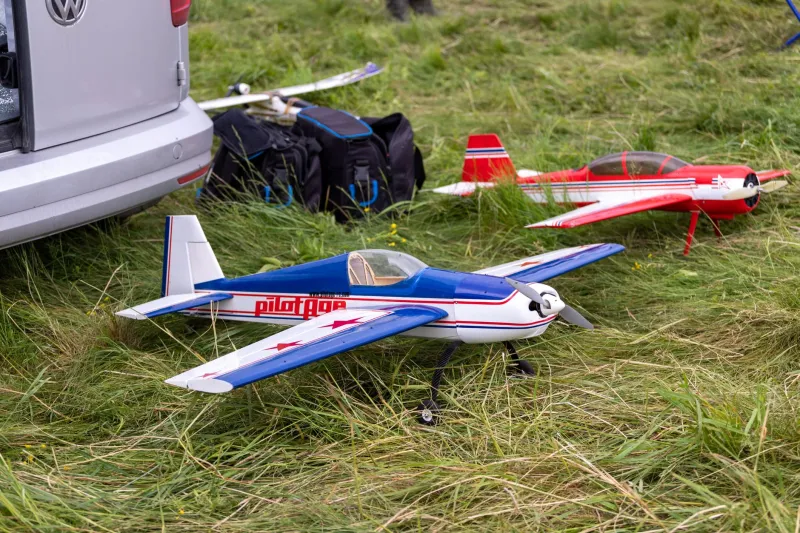
There is a particular silence at club night when someone says the words first competition. The model is finished, the photos have been taken, and suddenly the real risk begins: getting it from a spare room in Colchester to a show table somewhere down the A12 without snapping an aerial or flattening a decal.
I will confess my own sin early. Years ago I carried a completed 1/72 fighter to a local show in a supermarket carrier bag. The tailplane did not survive the car park. These days I pack a model like it is going to hospital: padded, labelled, and with a small bag of things that might be needed in theatre. With the 2026 show calendar winding down, it feels like a good time to write down the routine.
The box is not the model
A model does not need a grand transport crate. It needs a box that stops it moving and stops anything else touching it. A really useful box, a plastic storage tub, or even a sturdy cardboard box will do, provided the inside is lined with foam. Closed-cell foam is ideal, but soft foam blocks and bubble wrap work if you are careful. The key is to cradle the model rather than wrap it tightly. Pressure points are where paint lifts and struts bend.
Do not let bare bubble wrap sit against a glossy finish for long journeys. Kitchen roll is fine for drying brushes, but it can leave texture in soft varnish. A layer of acid-free tissue or a clean microfibre cloth between model and padding is kinder. If the model has a base, transport the base separately unless it is light and rigid. A heavy diorama base attached to a fragile aircraft is a lever waiting to happen.
Label the box with which way is up. It sounds obvious until you are loading a car in the dark. If you use foam blocks, cut them so the model sits in the same attitude it does on the shelf. Undercarriage down models need support under the belly, not just at the wingtips.
What goes in the touch-up roll
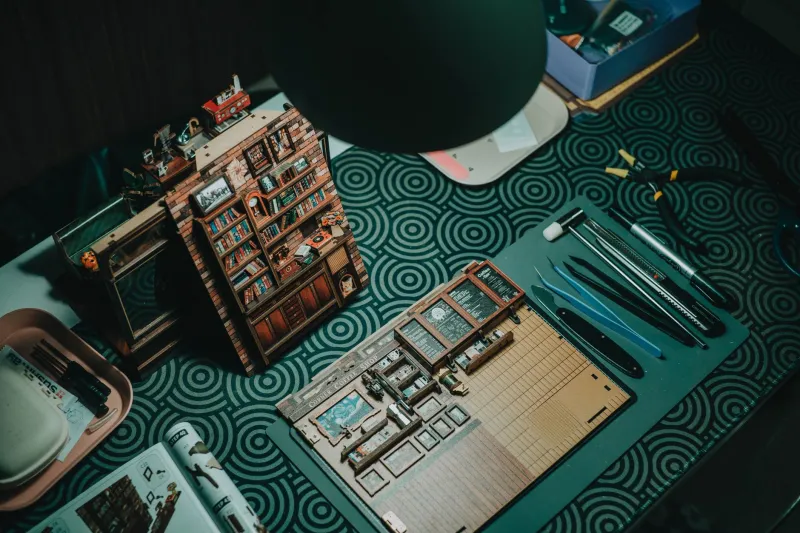
My show roll is small enough to fit in a coat pocket. It contains a few dropper bottles of the main colours, a fine brush, a tiny bottle of gloss varnish, superglue gel, plastic cement, a sanding sponge, cotton buds, cocktail sticks, Blu-Tack, tweezers, a microfibre cloth, and a small torch. That is it. The full tool roll stays at home.
A touch-up kit is not a repair shop. It is there for the chip you can see and the part that has shifted a millimetre. Matching paint is easier if you decant a little before the show. Do not carry large solvent bottles on a train if you can avoid it, and check venue rules before bringing aerosols. Most halls are reasonable, but there is no point arguing about a rattle can at the door.
A spare decal or two from the same sheet is worth its weight in gold. So is a scrap of the same varnish you used. If you used an enamel clear coat, do not turn up with an acrylic touch-up and expect a seamless blend. Know your chemistry before you travel.
Fragile parts: remove, brace or accept
Props, aerials, pitot tubes and open hatches are the usual casualties. If a part is designed to come off, take it off and bag it with a label. Small grips or a compartment box stop tiny pieces vanishing into the foam. If it is fixed, build a foam cradle around it so it cannot flex.
For biplanes and rigged models, brace the wings with soft foam. For tanks, consider whether the turret can travel separately. For figures, a compartment box with tissue is better than a shared bag. Dioramas are their own discipline: figures off the base, vehicles in their own cradles, and the base packed flat. Do not let a resin figure roll around inside a scenery box like a loose sweet.
Accept that some parts are safer left slightly loose than forced. A prop that spins freely in its hole can be taped in place with low-tack tape. A canopy that is only tacked on may be better removed and packed separately. The aim is not to arrive with everything exactly as it left. The aim is to arrive with everything still attached.
The pre-departure check
A week before the show, give the model a gentle dust and a hard look. Check seams, decals, varnish and anything that feels loose. Do not start a major weathering project the night before. That is how a finished model becomes a rescue job.
The night before, pack the box, print the entry form if there is one, and put cash, tickets and a contact number in your pocket. Check the route. Colchester to a Suffolk hall is not the same as Colchester to Kent, and the A12 has its own opinions. If you are going by train, remember that a model box on a lap is safer than one in an overhead rack.
On the morning, resist the urge to fiddle. A model that has survived the shelf for three months does not need a new wash on the day. Load the box level, keep it off the parcel shelf, and do not leave it in a hot car while you queue for a bacon roll. Heat and pressure do terrible things to varnish.
The last-minute repair
At the show, find a quiet table and good light before you touch anything. Clean the break with a cotton bud. Support the part so it cannot move. Use a tiny amount of superglue gel rather than a flood of thin glue, and keep accelerator away from painted surfaces unless you have tested it. For a paint chip, apply the matching colour with the tip of a cocktail stick, let it dry, then blend the edge and seal it with varnish.
If a decal lifts, resist the temptation to rub it. A little decal softener and a damp cotton bud can coax it back. If a canopy cracks, leave it alone. A visible repair is better than a spreading one. And if the fix does not work, put the model on the table anyway. The story of the repair is part of the model now.
What to leave at home
The airbrush, the compressor, the full toolbox, the Dremel, the rattle cans and the perfection. A show is not the place for a full rebuild. Carry enough to stabilise, not enough to start again. The best tool roll is the one you can close with one hand while holding a model in the other.
Packing a model for its first show is not about distrusting your work. It is about respecting the journey. The table is part of the build now, and a little foam, a little tape and a steady hand are all it takes to get there.