Yellowed, Not Written Off: The Colchester Night That Gives Old Decals a Second Go
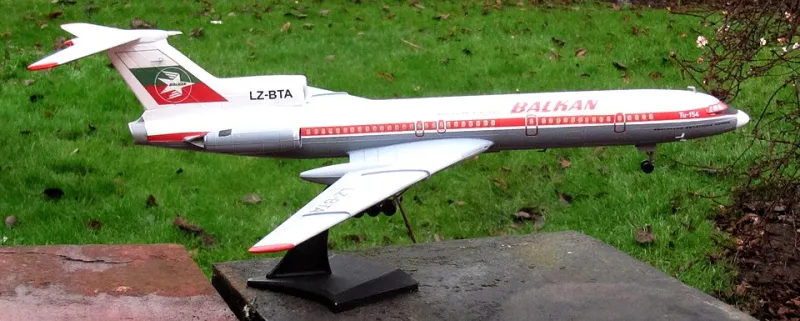
Photo: kitmasterbloke, CC BY 2.0, via Wikimedia Commons
Every modeller in Colchester has one. The decal drawer: a shallow plastic tray, an old kit box, maybe a labelled envelope that has long since lost its label. Inside are waterslide sheets cut down to the good bits, sheets kept “just in case”, and sheets that have gone the colour of weak tea. Most of them are not rubbish. They are just forgotten.
That was the starting point for our latest club night at the A1 Models bench room. No slide show, no lecture on adhesive chemistry. Just a long table, a few trays, a jug of lukewarm water and a sign that read: Bring your orphans. Test before you swap.
The drawer problem, said out loud
The first ten minutes were basically a confession session. One member admitted to keeping a 1/72 sheet because it had the right squadron codes, even though the roundels had yellowed. Another had three identical sheets from the same kit, all missing the same two stencils. Someone else produced a bag of decals so old the backing paper had started to curl like a dry leaf.
None of this is unusual. Decals accumulate because kits get built, schemes change and aftermarket sheets often give you six options when you only need one. The useful leftovers go back in the drawer. The drawer becomes a filing system for good intentions.
The club-night fix was not to pretend every old sheet is salvageable. It was to sort the living from the dead, quickly and honestly, and then get the good stuff moving again.
Sorting by scale first, subject second
We set up three trays: 1/72, 1/48 and everything else. That last tray is always chaos, but it keeps the main tables usable. Within each scale, members laid sheets flat and wrote a small card beside them: subject, manufacturer if known, sheet number, and a one-word condition note — crisp, yellowed, brittle, partial.
The condition note matters more than the subject. A yellowed sheet of Luftwaffe crosses is still useful if it holds together in water. A crisp-looking sheet that has been stored in a hot loft for a decade may shatter the moment it slides off the paper. We were not grading for collector value. We were grading for whether the thing would survive a soak and a brush.
The two-minute test
This was the heart of the night. Before any sheet went into the swap pile, the owner cut a small sample from the margin or from a marking they would never use. Not the best roundel. The scrap at the edge.
The sample went into lukewarm water for roughly thirty seconds, then onto a scrap of glossed plastic card. We looked for three things: whether it released from the backing paper, whether it curled into a tube, and whether it stayed in one piece when nudged with a soft brush. A sheet that passed got a green dot on its card. A sheet that failed got a red dot and a quiet retirement.
A few surprises came out of this. One sheet that looked badly yellowed released perfectly and dried clear. Another that looked pristine turned into confetti. The test is not a guarantee, but it stops the worst trades before they happen.
Reviving a yellowed sheet without wrecking it
We kept the revival advice deliberately simple, because old decals are not a place for heroics.
- Coat first if the sheet is fragile. A thin layer of liquid decal film over the whole sheet can hold brittle markings together. Let it cure properly before cutting anything out.
- Use lukewarm water, not hot. Hot water softens the adhesive faster, but it also encourages curling and tearing. Give the decal longer, not hotter.
- Soak, do not drown. A small dish is enough. Keep the water clean and change it between sheets.
- Test the margin. Always cut a scrap first. If the margin fails, the main markings probably will too.
- Skip the hairdryer. Warm air and old decals are not friends. Let them settle naturally and use a softener only after the decal is in position.
Yellowing itself is a different issue. Some of it sits in the paper and some in the adhesive, and no amount of soaking will make a badly stained sheet look white again. If the marking is going onto a dark scheme, a little yellow may not matter. On a white finish, it will. That is a judgement call, not a rule.
Fair-swap rules that keep it friendly
We borrowed a format from the club’s spares table and kept it short.
- Bring at least one sheet to trade. No pure shopping.
- One-for-one by scale. A 1/72 sheet gets a 1/72 sheet, unless both sides agree otherwise.
- No cash on the table. This is a swap, not a stall.
- Label honestly. If it is partial, say so. If it is yellowed, say so. The green dot is not a warranty.
- First refusal goes to the owner. If someone wants to keep a sheet after testing, that is fine. Nothing is forced into the pool.
The result was a surprisingly calm table. People traded stencils they would never use for roundels they needed, and nobody spent the evening haggling over a sheet that cost less than a cup of coffee.
Building the Colchester decal index
The last job of the night was the least glamorous and probably the most useful. We started a shared index.
It is a simple spreadsheet, mirrored on a few index cards for the club room. Each row records the scale, subject, manufacturer, sheet number, condition, owner and whether the sheet is available to swap, lend or only to view. Nothing complicated. The point is to stop good markings from disappearing into the drawer again.
We are not trying to build a museum catalogue. If someone in Colchester needs a set of 1/72 RAF serials or a pair of 1/48 bomber codes, they should be able to ask the club and get an answer that is not “I think I have some somewhere”. The index does that.
What went home in the box
By the end of the night, the red-dot pile was smaller than expected and the green-dot pile had been picked over. One member went home with a full set of stencils for a kit that has been on the shelf for two years. Another found a sheet of 1/72 serials that matched a build he had stalled on. The drawer was not empty, but it was lighter and better understood.
That is the point of a night like this. Not a perfect archive, not a polished presentation. Just a few hours at the club table, a jug of water and a bit of honesty about what is worth keeping. If your decal drawer is starting to look like a paper recycling bin, bring it along next time. Cut a scrap, give it a soak, and see what still works.